
If you manage a retail store, medical office, or commercial building anywhere from downtown San Jose to the Silicon Valley business corridor, you’ve probably asked yourself the same question at some point: how often do these floors actually need to be stripped and waxed? Mopping keeps them clean day to day, but it doesn’t stop the finish underneath from wearing thin, yellowing, or turning into a slip hazard.
This guide breaks down exactly how often San Jose businesses should schedule strip and wax service, what changes that timeline, and how to spot the warning signs before your floors start costing you more than a maintenance visit would have. If you’re ready to book a professional evaluation, our team offers [strip and wax floor services in San Jose] built around exactly the schedules covered here.
What Strip and Wax Actually Involves
Before getting into timing, it helps to understand what’s actually happening during a strip and wax visit, because it’s not the same thing as a deep mop.
Commercial hard floors like VCT (vinyl composite tile), linoleum, and even some terrazzo surfaces are typically protected by several layers of acrylic finish. That finish is what gives the floor its shine and its resistance to scuffs, stains, and foot traffic. Over months of use, that finish absorbs dirt, oxidizes, and starts to look dull or yellow no matter how often it’s mopped.
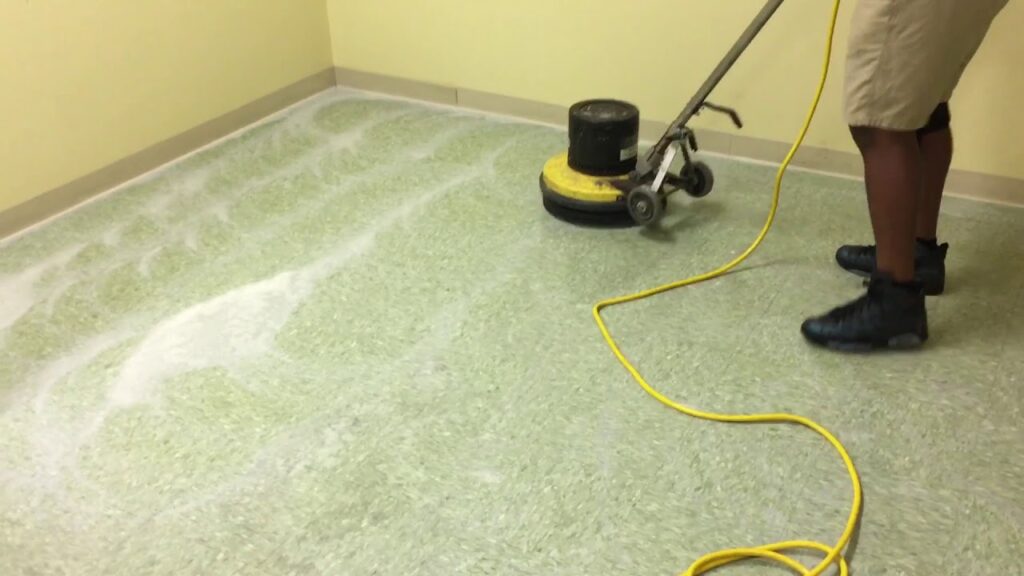
Stripping removes all of that old finish down to the bare tile using a chemical stripping agent and a low-speed floor machine. Once the surface is neutralized and fully dry, a technician applies several fresh coats of commercial-grade wax, letting each coat cure before adding the next. The result is a floor that looks new again and, more importantly, has a fresh protective layer standing between foot traffic and the actual flooring material underneath.
How Often Should San Jose Businesses Strip and Wax Their Floors
There’s no single answer that fits every building. The right frequency depends almost entirely on how much traffic the floor absorbs and what kind of dirt or debris gets tracked in. Here’s a realistic breakdown based on typical San Jose commercial environments.
A few things push these timelines in either direction. Buildings near construction zones or gravel parking lots deal with more grit getting tracked in, which scratches the finish faster. Facilities close to San Jose’s downtown transit corridors often see heavier foot traffic simply from the volume of visitors. On the other hand, a well-maintained office with a strong entrance mat system and daily dust mopping can often stretch toward the longer end of its range.
Signs Your Floor Is Overdue for Stripping and Waxing
Even with a schedule in place, it’s worth knowing the visual cues that mean it’s time to call sooner rather than later.
- The floor looks dull or hazy even right after mopping
- Yellowing is visible, especially near entrances and high-traffic aisles
- Scuff marks and black heel marks don’t come off with routine cleaning
- The surface feels sticky or tacky underfoot
- You notice uneven shine, patchy or streaky in some areas and dull in others
- Small scratches or wear patterns are visible in walking lanes
- The floor feels noticeably more slippery when wet than it used to
If two or more of these apply to your facility right now, the finish has likely broken down past the point where a simple buff and recoat will fix it, and a full strip and wax is the more cost-effective move.
The Strip and Wax Process, Step by Step
Understanding the process helps set expectations for scheduling, since most commercial jobs happen after hours specifically to avoid disrupting daily operations.
Site Walkthrough and Assessment. A technician evaluates the flooring material, the current condition of the finish, and any problem areas that need extra attention, like heavily scuffed entryways.
Furniture and Obstacle Prep. Movable items are cleared or relocated so the entire floor surface can be worked on without gaps.
Applying the Stripping Solution. A commercial stripping chemical is applied and given time to break down the old wax layers before agitation begins.
Machine Scrubbing. A low-speed floor machine with a stripping pad works the solution into the surface, lifting the old finish and embedded grime.
Rinse and Neutralize. The floor is rinsed thoroughly and neutralized to remove any leftover stripping residue, since wax won’t bond properly to a surface that still has chemical residue on it.
Drying. The floor needs to be completely dry before any finish goes down. Rushing this step is one of the most common causes of a wax job failing early.
Applying Fresh Wax Coats. Multiple thin coats, typically three to five depending on the traffic level, are applied and allowed to cure between layers.
Final Inspection and Cure Time. Once the last coat is down, the floor needs additional time before it can handle foot traffic or furniture being moved back into place, which is why most commercial jobs are scheduled overnight or over a weekend.

Does Floor Type Change the Maintenance Schedule?
Not every hard surface behaves the same way under a wax finish, and San Jose commercial buildings have a mix of flooring types.
VCT (Vinyl Composite Tile) is the most common floor type found in retail stores, schools, and office buildings, and it’s also the material that responds best to traditional strip and wax service. It finishes well and typically follows the standard schedules listed above.
Linoleum is more porous than VCT and can be more sensitive to overly aggressive stripping chemicals. It generally needs a gentler approach and slightly more frequent recoating in high-traffic zones to avoid premature wear.
Terrazzo is a different case entirely. Because terrazzo is a poured, porous surface rather than tile, it’s often better served by polishing and sealing rather than a standard acrylic wax, though many buildings still use light finish coats for added protection between full restoration work.
If you’re not sure what flooring material you have, or whether it’s due for a full restoration versus routine maintenance, a walkthrough with a technician is the fastest way to get a straight answer.
What Affects Floor Waxing Cost and Timeline in San Jose
Pricing for strip and wax service varies based on a handful of factors, and knowing them ahead of time makes it much easier to budget accurately.
- Square footage. Larger floor areas take more time and more product, which is the biggest single driver of price.
- Number of coats needed. High-traffic areas usually require more coats of finish for adequate protection, which adds labor time.
- Condition of the existing finish. A floor with years of buildup takes longer to strip than one that’s simply due for routine service.
- Access and layout. Facilities with a lot of furniture, fixtures, or tight corners take longer to prep and work around.
- Scheduling window. After-hours or weekend service, which most commercial clients prefer to avoid disrupting business, can factor into overall project cost.
- Local labor and material rates. Bay Area service pricing generally runs higher than national averages, which is worth factoring into budget expectations.
DIY Floor Waxing vs. Hiring a Professional Crew
It’s technically possible to rent equipment and strip a small floor yourself, but for most commercial spaces, it’s not the money-saver it looks like on paper. Commercial-grade stripping chemicals need to be handled correctly to avoid damaging the substrate underneath. Uneven application, rushed drying time, or the wrong pad speed can leave a floor looking worse than before, sometimes requiring a full redo that costs more than hiring a professional the first time.
A professional crew brings the right equipment for the square footage, understands how to schedule around your operating hours, and knows how different flooring materials respond to different products, which matters most when a building has more than one floor type.
Green and Low-VOC Floor Care Options
A growing number of San Jose businesses want a bright, glossy finish without the strong chemical smell that traditionally comes with stripping and waxing. Low-VOC strippers and finishes have closed that gap significantly in recent years. They deliver a comparable shine and durability while cutting down on strong odors and improving indoor air quality during and after the service, which matters for occupied buildings like offices and medical spaces where staff and clients are present shortly after the work is done.
How to Choose a Strip and Wax Company in San Jose
A few questions are worth asking before booking any provider:
- Do they have experience with your specific floor type (VCT, linoleum, terrazzo)?
- Can they schedule the work after hours or on weekends to avoid disrupting business?
- Do they offer low-VOC or green product options if that matters to your facility?
- Will they provide a walkthrough and written estimate before starting?
- Do they offer ongoing janitorial maintenance to protect the finish after the job is done?
A provider who can answer yes to all five is generally set up to handle the job without surprises.

Maintaining Your Investment Between Services
A strip and wax job holds up much longer when it’s supported by consistent daily care. Regular dust mopping keeps grit from scratching the surface, damp mopping with a neutral cleaner (not an all-purpose degreaser) prevents the finish from breaking down early, and placing walk-off mats at entrances cuts down significantly on the dirt and moisture tracked in from outside. Pairing your strip and wax schedule with routine janitorial service is generally the most cost-effective way to stretch the life of the finish and delay the next full restoration.
Conclusion
Floor finish doesn’t fail all at once. It wears down gradually, and by the time it looks obviously dull or yellowed, the underlying flooring material has usually already started taking on damage that mopping alone can’t fix. Matching your strip and wax schedule to your actual traffic level, rather than guessing, is the simplest way to protect the investment and keep your San Jose facility looking the way it should for clients, patients, or employees walking through the door.
If your floors are overdue, or you’re just not sure where they stand, a walkthrough with a professional crew is the fastest way to get a clear answer and a realistic timeline.
FAQ’s
How do I know if my floor needs stripping and waxing?
Look for dull or hazy patches, yellowing near entrances, stubborn scuff marks, uneven shine, or a floor that feels sticky underfoot. If daily mopping no longer restores the shine, the finish has likely broken down and needs full restoration.
What’s the difference between floor waxing and floor sealing?
Sealing creates a base protective layer directly on the flooring material, while waxing adds a topical finish coat over that seal for shine and added protection. Most commercial strip and wax services include both steps for lasting durability.
Can strip and wax service happen during business hours?
It’s possible for smaller areas, but most San Jose commercial jobs are scheduled after hours or on weekends. This avoids foot traffic on wet floors and gives the finish uninterrupted time to properly cure.
Is a fresh wax finish slippery right after application?
Fresh wax needs time to cure fully. Light foot traffic is usually safe after a few hours, but heavy carts or furniture should wait longer. Once cured, quality commercial finish is actually more slip resistant than a worn, unprotected floor.
How long does a fresh wax finish typically last?
It depends on traffic volume, but most commercial floors hold a healthy shine for 3 to 12 months before needing a recoat or full strip and wax, based on the schedules outlined in this guide.
What types of commercial floors can be stripped and waxed?
VCT and linoleum are the most common candidates and respond very well to traditional stripping and waxing. Terrazzo can also be finished, though it’s sometimes better suited to polishing and sealing depending on its condition.
