
Most offices don’t get dirty all at once. A little dust builds up on monitor stands. The kitchen sink gets a coffee ring, then a few more. Someone stops emptying the recycling bin because “it’s not my job.” Then a client walks in on a Tuesday and sees it all at once.
If you’re responsible for an office in San Jose, you’ve probably wondered what a professional cleaning service should actually do, how often you need one, and what it should cost. This guide answers those questions in plain terms. It also covers the part most guides skip: how to keep the space clean and healthy in the days between visits.
Quick Takeaways
- Office cleaning is recurring maintenance of the spaces people use every day. It’s different from deep cleaning or specialty work.
- Most offices do well with service somewhere between one and five nights a week, depending on headcount, foot traffic, and restrooms.
- Cleaning removes dirt and germs. Disinfecting kills germs that are left. High-touch surfaces need both, in the right order.
- Prices vary widely. Ask for a written scope, not just a number.
- A cleaning schedule works best when it’s built around how your office is actually used.
What Is Office Cleaning?
Office cleaning is the routine upkeep of a workplace: floors, trash, restrooms, kitchens and break rooms, desks and shared surfaces, and the entryway visitors see first. It’s usually done on a recurring schedule, often after hours, by a janitorial or commercial cleaning company.
The word routine matters. Office cleaning isn’t a one-time blowout. It’s the steady work that keeps a space presentable and sanitary so it doesn’t need rescuing later.
A typical scope covers things like:
- Emptying trash and recycling
- Vacuuming carpets and sweeping or mopping hard floors
- Cleaning and restocking restrooms
- Wiping counters, tables, and shared surfaces
- Cleaning break room sinks, counters, and appliance exteriors
- Dusting reachable surfaces
- Cleaning glass at entries and interior windows
- Spot-cleaning spills and marks
Anything beyond that, like carpet extraction, floor stripping and waxing, or exterior windows, is usually a separate service.
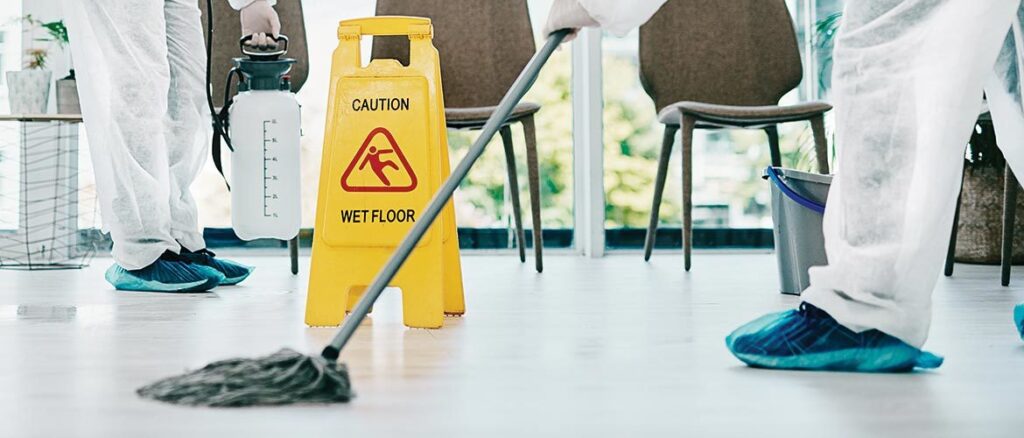
Why Is Regular Office Cleaning Important?
A few practical reasons, none of them dramatic.
People notice. Clients and candidates form a quick impression of a business from its entryway, restrooms, and conference room. A stained carpet or a dusty reception desk won’t lose you a deal on its own, but it doesn’t help.
Shared spaces get dirty fast. Kitchens, restrooms, door handles, and meeting tables are used by many people each day. Without a routine, buildup happens quickly.
Your team works there. Staff spend a large part of the week in the space. A tidy, well-kept office is simply a nicer place to spend it.
It saves you from awkward cleanup. When cleaning is left to whoever has time, it either doesn’t happen or lands on the person least able to say no. A scheduled service removes that problem.
It protects your building. Regular vacuuming and floor care extend the life of carpet and hard flooring, and prompt attention to spills helps prevent stains that become permanent.
Office Cleaning vs. Commercial Cleaning: What’s the Difference?
The terms get used interchangeably, which causes confusion when you’re comparing quotes. Here’s the practical difference.
Commercial cleaning is the broad category: cleaning for any non-residential building. That includes offices, but also retail stores, restaurants, medical and dental practices, schools, gyms, warehouses, and industrial sites.
Office cleaning is a specific type of commercial cleaning focused on workplaces made up of desks, meeting rooms, restrooms, and break areas.
| Office Cleaning | Broader Commercial Cleaning | |
| Typical spaces | Workstations, conference rooms, reception, restrooms, break rooms | Retail floors, restaurants, clinics, schools, gyms, warehouses |
| Main concerns | Presentation, shared-surface hygiene, restrooms, trash | Depends on the industry: food safety, patient areas, heavy equipment, public access |
| Special requirements | Usually few, aside from confidentiality and electronics | Often industry-specific protocols and compliance needs |
| Typical schedule | After hours, one to five times per week | Varies widely, sometimes daily or during operating hours |
So if you run an office, you want a provider that does office cleaning well. A company that also handles other commercial spaces is fine, as long as they can explain how your scope differs from those jobs. If your office includes a clinic, lab, or food service area, tell them, because those spaces may need different products and procedures.
How Often Should an Office Be Professionally Cleaned?
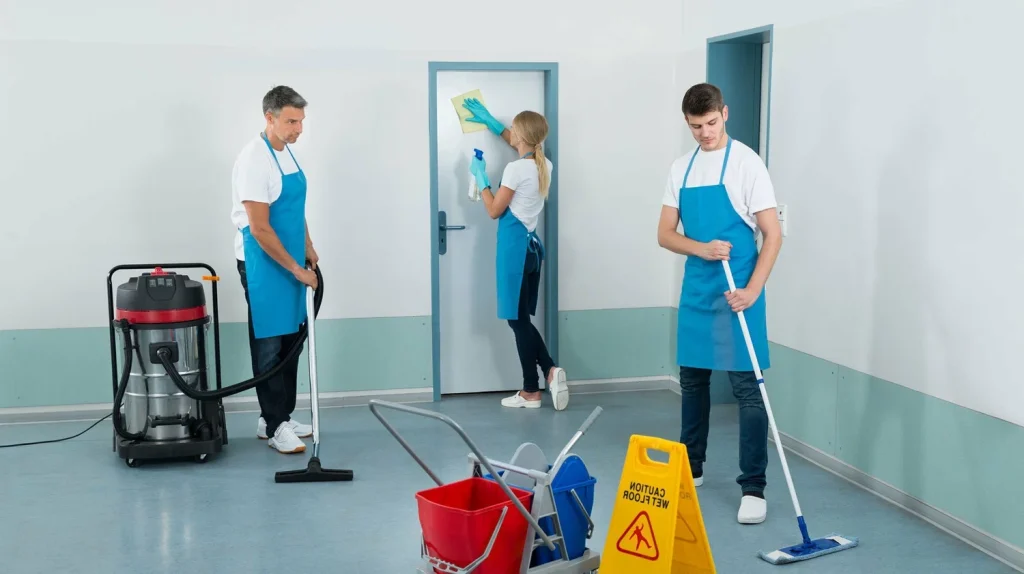
There’s no single correct answer, and anyone who gives you one without asking questions isn’t looking at your office. Frequency depends on a handful of things: how many people use the space, how many visitors you have, how many restrooms and kitchens there are, and how much you care about how the space looks.
Here’s a general starting point. Treat it as a guide for a conversation, not a rule.
| Type of Office | Common Starting Frequency | Why |
| Small office, a few staff, few visitors | 1–2 times per week | Low traffic, light restroom use |
| Mid-size office, regular staff, some visitors | 2–3 times per week | Kitchens and restrooms need regular attention |
| Busy office with daily client visits | 3–5 times per week | Reception and restrooms need to look fresh every day |
| Large office or multi-tenant building | 5 nights per week | Heavy use, high visibility |
| Shared/coworking space | Daily, plus mid-day restroom checks | Constant turnover and shared kitchens |
Some tasks don’t need to happen every visit. Trash, restrooms, and kitchens are usually daily or near-daily jobs. Dusting, glass, and detailed cleaning can be weekly or monthly. It’s common to set a base schedule and add periodic deep tasks on top.
What Does Professional Office Cleaning Include?
Ask any company for their checklist in writing. Here’s what a solid scope often looks like, grouped by how often each task happens.
Every visit
- Empty trash and recycling, replace liners
- Vacuum carpets and dust-mop or wet-mop hard floors
- Clean and restock restrooms
- Wipe break room counters, tables, and sinks
- Clean high-touch surfaces in agreed areas
- Spot-clean glass, doors, and walls where needed
Weekly
- Detailed dusting of surfaces and ledges
- Clean the inside of microwaves and the outside of appliances
- Vacuum edges and under desks
- Clean conference rooms in more detail
Monthly or quarterly (often extra)
- High dusting, vents, and blinds
- Deep carpet cleaning or extraction
- Floor stripping, waxing, or buffing for hard floors
- Interior and exterior window cleaning
What isn’t included should also be written down. Common exclusions are cleaning personal items on desks, handling paperwork, moving heavy furniture, or cleaning inside refrigerators. Neither side should have to guess.
What Areas Should Be Prioritized During Office Cleaning?
If budget or time is tight, spend your cleaning hours where they matter most. Roughly in this order:
- Restrooms. They affect health and perception more than any other space.
- Kitchens and break rooms. Food residue, shared appliances, and sinks need regular attention.
- Reception and entryways. This is the first thing clients see and where dirt enters the building.
- Conference rooms. Tables, chairs, and door handles get used by many people.
- High-touch surfaces throughout the office. Door handles, light switches, shared equipment.
- Floors in high-traffic paths. Hallways and entry paths wear out first.
- Individual workstations. Usually the lowest priority for the cleaner. Employees can wipe their own desks.
Your own list may differ. A design studio might put the client-facing showroom first. A company with an on-site kitchen might weigh that higher.
What Cleaning Methods Are Suitable for Different Office Areas?
Different surfaces call for different treatment. Using the wrong method wastes time, and sometimes damages the surface.
| Area | Suitable Methods | Things to Watch |
| Carpet | Regular vacuuming, spot treatment, periodic hot-water extraction | Use the right vacuum. Address spills quickly to avoid stains. |
| Hard floors (tile, vinyl, sealed concrete) | Dust mopping, then damp or wet mopping with a suitable cleaner | Too much water or the wrong product can damage finishes. |
| Wood or laminate floors | Dry mopping and lightly damp cleaning | Avoid soaking. Follow the manufacturer’s guidance. |
| Restrooms | Clean, then disinfect fixtures and touched surfaces. Mop floors. | Separate clothes for restrooms and other areas prevent cross-contamination. |
| Break rooms and kitchens | Degrease counters, clean sinks, wipe appliance exteriors | Use food-safe products on surfaces that touch food. |
| Glass and mirrors | Streak-free glass cleaner and microfiber cloths | Ammonia-based products may not suit tinted or coated glass. Check first. |
| Desks and workstations | Light dusting, gentle wipe-down of clear surfaces | Cleaners often avoid moving papers or personal items. |
| Electronics | Manufacturer instructions, or wipes with an appropriate alcohol content | Never spray liquid directly onto screens or keyboards. |
| Upholstery and fabric seating | Vacuuming and spot cleaning | Porous surfaces are harder to disinfect. |
If you have a special surface (natural stone, specialty flooring, historic wood), tell the company up front and ask what they’ll use.
How Does Office Cleaning Help Maintain a Healthier Workplace?
Cleaning can’t make an office germ-free, and no reputable cleaner promises that. What it does is reduce the dirt, allergens, and germs people share, especially on surfaces many hands touch.
A few specifics:
- Removing soil and germs. Public health guidance emphasizes that cleaning with soap or detergent physically removes contaminants from surfaces, which lowers the amount left to spread.
- Reducing dust and allergens. Regular vacuuming and dusting keep particles from building up on floors, vents, and shelves.
- Preventing kitchen and restroom buildup. Food residue and moisture are where bacteria and mold thrive. Frequent attention prevents it.
- Handling waste properly. Removing trash and recycling on a schedule limits odors and pests.
- Supporting healthier habits. A clean, stocked restroom with soap and paper towels makes hand washing easier.
That last point is a good reminder that cleaning is one piece of a healthy workplace. Ventilation, hand hygiene, and staying home when sick matter too.
How Should High-Touch Office Surfaces Be Cleaned?
High-touch surfaces are the ones lots of people touch every day: door handles, light switches, elevator buttons, shared keyboards, conference room remotes, faucet handles, break room appliance handles, and shared phones and printers.
CDC workplace guidance, written during the COVID-19 pandemic and still a useful reference, recommends prioritizing these surfaces and cleaning them at least once a day. It also draws a helpful distinction:
- Cleaning uses soap or detergent to remove dirt, germs, and residue.
- Disinfecting uses a registered disinfectant to kill germs that remain after cleaning.
The basic method:
- Clean first. Wipe visible dirt away with detergent and water or a cleaning product. Disinfectants work poorly on dirty surfaces.
- Apply a disinfectant if needed. In most everyday office situations, regular cleaning is enough. Disinfect when there’s a reason to, such as a recent illness in the space or a high-risk area like restrooms.
- Follow the label. Disinfectants need to stay wet on the surface for a set contact time. Wiping too soon defeats the purpose.
- Use the right product for the surface. For electronics, follow the manufacturer’s instructions. If there aren’t any, CDC guidance has pointed to alcohol-based wipes with at least 70% alcohol, then drying the surface.
- Use clean clothes. Change them often, and keep restroom clothes separate.
- Protect the cleaner. Staff should be trained on chemical use, and gloves worn as the product label directs.
Ask any cleaning company how they handle this: which products, what contact times, and how they avoid spreading germs from one area to another.
How Can Businesses Maintain Clean Offices Between Professional Cleanings?
A cleaning crew a few nights a week can’t stop a spill on Monday morning. A little shared effort fills the gaps.
Quick daily habits
- Wipe up spills right away.
- Clear food and dishes from desks and the break room by the end of the day.
- Wipe the microwave and table after use.
- Empty personal trash cans that hold food waste, so they don’t smell.
Team supplies
- Keep wipes or a spray bottle and paper towels in the kitchen and meeting rooms.
- Stock hand soap and sanitizer.
- Put a doormat at entrances to catch dirt.
Simple house rules
- Use covered containers for food waste.
- Clean the refrigerator on a set schedule (weekly is common) so old food doesn’t build up.
- Ask people to wipe down shared equipment after use.
Shared responsibility
- Have a simple way to report problems, like a shared inbox or a note to the office manager.
- Tell your cleaning company about issues so they can adjust.
None of this replaces professional cleaning, but it keeps a two-night-a-week schedule from feeling like it isn’t enough.
What Should You Consider When Planning an Office Cleaning Schedule?
A good schedule fits how your office really operates. Think through these questions before you request quotes.
Building and space
- How many square feet and how many floors?
- How many restrooms, kitchens, and conference rooms?
- What kinds of flooring do you have?
People
- How many employees, and how many are in the office on a typical day?
- Do you host clients, candidates, or events?
- Is your team hybrid? Fewer people on-site may mean fewer visits.
Timing and access
- When can cleaners come? After hours is common. Daytime is possible but disruptive.
- How will they get in? Keys, codes, or building security.
- Any quiet hours or confidentiality needs?
Health and sensitivity
- Do you have staff with allergies or chemical sensitivities?
- Do you want fragrance-free or lower-odor products?
- Are there labs, clinics, or food areas that need different handling?
Budget and flexibility
- What’s your monthly budget?
- Can the schedule change during busy seasons?
- How will you handle one-time extras, like a move-in cleaning or event prep?
Step-by-step approach
- Walk the space with a checklist and note problem areas.
- Decide which tasks are daily, weekly, and periodic.
- Ask two or three companies for a walkthrough and written scope.
- Compare scope, not just price.
- Start with a trial period or a short review after 30 to 60 days, then adjust.
What Does Office Cleaning Cost in San Jose?
Prices vary a lot, and published figures come from different sources that measure differently (per visit, per month, or per hour), so compare carefully. Here’s what a few 2026 guides show:
- National guides put recurring office cleaning at roughly $0.07 to $0.20 per square foot, with hourly rates around $30 to $75.
- One Bay Area guide reports $0.10 to $0.25 per square foot for recurring janitorial service and gives an example of about $800 to $1,400 a month for a 5,000-square-foot office cleaned three times a week.
- A South Bay facilities guide puts nightly service for a standard office at roughly $0.09 to $0.18 per square foot per month.
These are ballpark figures from third parties, not quotes. They differ in method, so don’t average them and treat the result as your price. What drives your actual number is size, frequency, restrooms, flooring, scope, and the current condition of the space. Get quotes in writing, and be careful with a bid that is far below the others. Something is usually being left out.
How Can Professional Cleaning Improve the Office Environment?
Beyond “it looks nicer,” here’s what tends to change when a good cleaning routine is in place.
- Better first impressions. Reception areas, meeting rooms, and restrooms stay client-ready.
- Fewer distractions. Nobody has to think about the overflowing trash or the sticky break room table.
- Employees focus on their jobs. Cleaning stops being a chore that eats into work or causes friction.
- A more comfortable space. Fresher air, cleaner surfaces, and less clutter make the office easier to be in.
- Consistent standards. A written scope and regular visits mean the level of cleanliness doesn’t depend on who has time.
- Longer-lasting surfaces. Floors, carpets, and fixtures last longer with regular care.
If you’re choosing a provider, look for one that talks about your office, not just their services. Superior Janitorial Systems serves San Jose and nearby South Bay cities and lists services like office sanitizing, floor cleaning, restroom cleaning, carpet cleaning, window cleaning, and green cleaning on its website. A good next step with any company is to ask for a walkthrough and a written checklist.
Questions to Ask Before You Hire a Cleaning Company
- Can I see a written scope of work and checklist?
- Who supplies the products and equipment?
- How do you train and supervise your cleaners?
- Are your workers employees or subcontractors?
- How is building access handled and secured?
- What insurance do you carry, and can you provide proof?
- What happens if something is missed?
- Can we adjust the schedule as our needs change?
- What is your policy on scheduling changes and cancellations?
- Can you provide references from similar-sized offices?
Frequently Asked Questions
Do I need a cleaning contract?
Not always. Some companies offer month-to-month service, and others use longer agreements. Read the cancellation terms, the notice period, and how price changes are handled before signing.
Should cleaning happen during work hours or after hours?
After hours is the most common because there’s less disruption and easier access to desks and floors. Daytime service can work for restroom checks or small offices, but noise and chemical odors can bother people.
Are “green” cleaning products actually effective?
They can be, depending on the product and how it’s used. If your team is sensitive to odors or chemicals, ask what products the company uses and whether it can provide product information sheets.
Do cleaners clean individual desks?
Usually only surfaces that are clear. Most cleaners avoid moving papers, personal items, and electronics unless asked. Agree on this in writing.
How do I handle confidentiality and security?
Ask how the company screens workers, how keys and codes are managed, and what its policy is on unattended areas. Lock away sensitive documents regardless.
What if we only need occasional cleaning?
One-time or periodic cleaning is common for move-ins, move-outs, events, or a reset before starting a regular schedule. Ask whether a one-time service can be converted to a recurring plan.
Can we reduce cost without lowering quality?
Often, yes. Trim the frequency of low-priority tasks, ask employees to handle their own desks, and keep the scope focused on restrooms, kitchens, floors, and high-touch surfaces.
How do I know if the cleaning is actually good?
Do walkthroughs, use a simple checklist, and note issues in writing. A reliable company welcomes feedback and adjusts.
