
Hardwood is one of the easiest floors to keep clean and one of the easiest to damage while cleaning. The usual culprits are a soaked mop, a steam cleaner, or a “natural” cleaner that quietly dulls the finish over a few months. Most of the damage isn’t from neglect. It’s from enthusiasm with the wrong tools.
This guide covers how often to clean, which methods and products are safe, how to handle dirt and stains, how to protect against scratches, how deep cleaning differs from refinishing, and when it’s worth calling a professional. It’s written for floor cleaning in San Jose homeowners and for the people who manage wood floors in offices, studios, and shops.
Quick Takeaways
- Dry-clean first, then damp-clean. Grit scratches more floors than water ever will.
- “Damp” means barely damp. Wet mopping, steam mopping, and soaking all risk damage.
- Use a cleaner made for hardwood that suits your floor’s finish. Skip vinegar, ammonia, bleach, and abrasives.
- Cleaning, deep cleaning, screen-and-recoat, and refinishing are four different jobs. Know which one your floor needs.
- Most scratch protection is cheap: mats, felt pads, trimmed pet nails, and soft-wheeled chairs.
- A cleaning company and a floor refinisher are different trades. Hire the one that matches the job.
How Often Should Hardwood Floors Be Cleaned?
It depends on traffic, but guidance from the National Wood Flooring Association (NWFA) gives a solid baseline: sweep daily, vacuum weekly, and deep clean with a wood floor solution monthly. Home Depot’s care guide says much the same, with a daily sweep or dry mop and a monthly clean using a recommended hardwood cleaner.
| Task | Typical Frequency | Notes |
| Dry dust mop or sweep | Daily in busy areas | Entryways, kitchens, hallways first |
| Vacuum with a soft floor head | Weekly | No beater bar |
| Damp-mop with hardwood cleaner | Every 1–4 weeks | More often with kids, pets, or foot traffic |
| Spot-clean spills | Immediately | Don’t let liquids sit |
| Deep clean | A few times a year, or when buildup shows | See the deep-cleaning section |
| Recoat | Often every 3–5 years, depending on wear | A pro assessment helps |
Some homes need less, and some need more. A quiet bedroom doesn’t need the same schedule as a kitchen with a dog. Commercial floors, like a lobby or studio, usually need more frequent dry maintenance.
San Jose’s mild, mostly dry climate means less mud than wetter regions, but dust, pollen, and fine particles from open windows can still build up. They act like sandpaper underfoot.
What Is the Best Way to Clean Hardwood Floors Without Damaging the Finish?
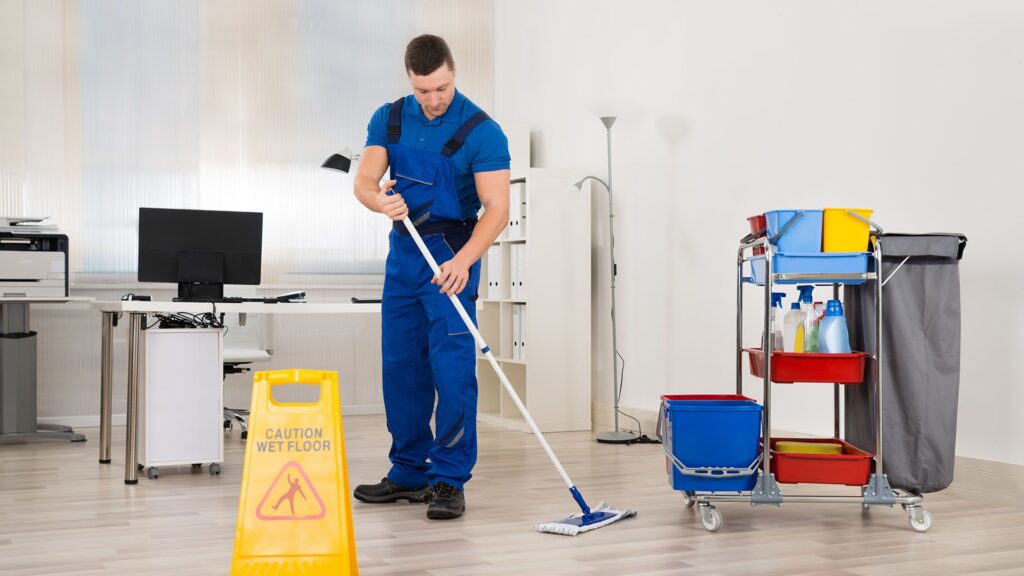
The safest routine is simple: remove grit, use a barely damp microfiber mop, use the right cleaner, and dry quickly. NWFA’s advice is to use a damp or near-dry mop, since wood and water don’t mix.
Step by step:
- Know your finish. This matters more than anything. Most modern floors have a surface finish such as polyurethane, which forms a protective barrier on top of the wood. Water-based cleaners are generally safe on these. Penetrating oil finishes soak into the wood and absorb water easily, so they need a drier approach. Check your installer’s or manufacturer’s care guide. If you aren’t sure, ask a flooring professional before experimenting.
- Remove loose dirt. Dust mop or vacuum with a soft brush head, and don’t use a beater bar.
- Test the cleaner in a hidden spot, like inside a closet.
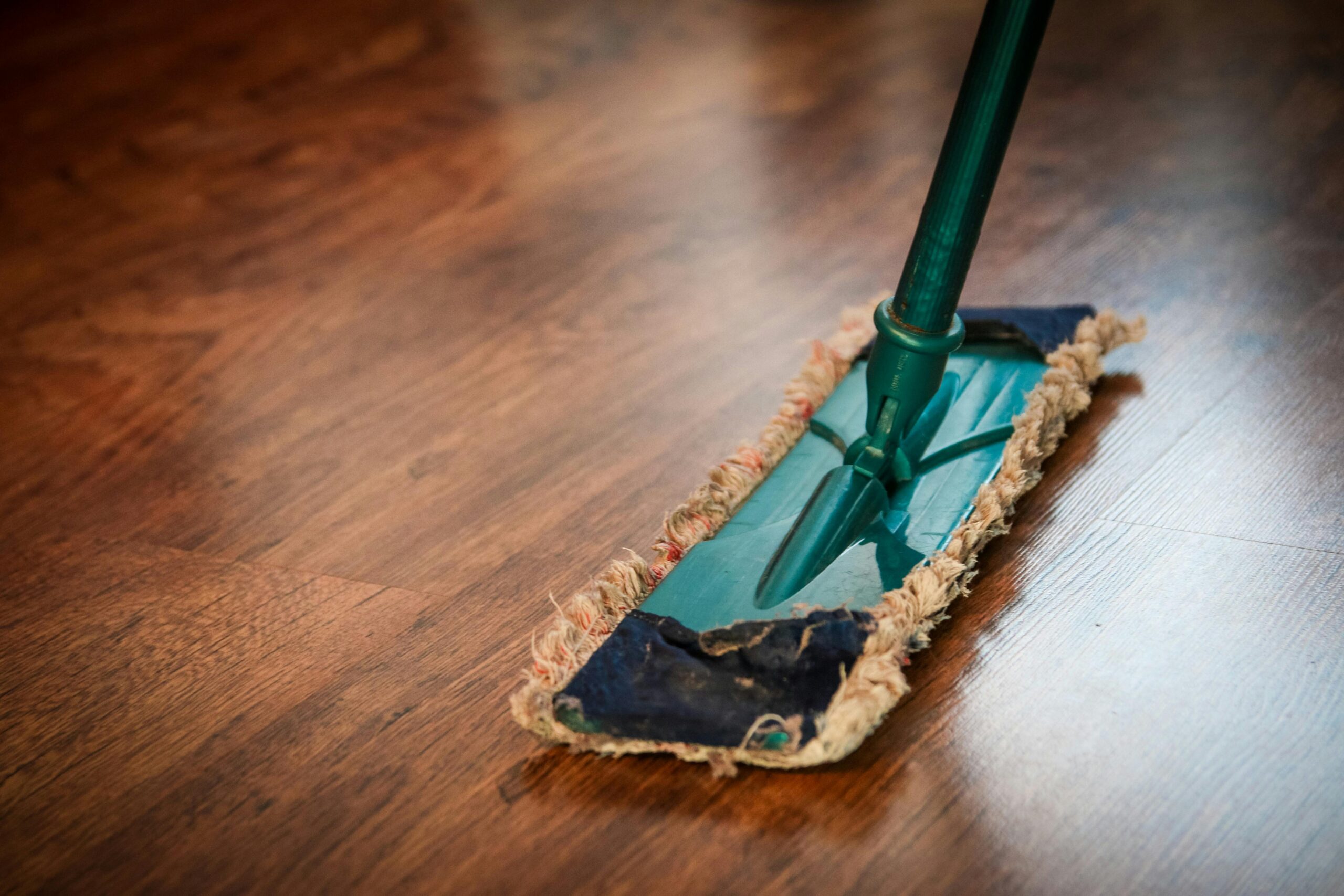
- Apply lightly. Spray the cleaner onto a flat microfiber mop pad, or mist the floor lightly, instead of pouring or soaking. Many pros avoid old-fashioned string mops because they hold too much water.
- Mop with the grain in small sections, and work backward toward an exit so you don’t walk on the wet floor.
- Swap to a clean pad when the first one gets dirty. A dirty pad just moves grime around.
- Dry quickly. Buff any damp areas with a dry microfiber cloth and let the floor air dry. Open a window or run a fan in humid weather.
Can You Mop Hardwood Floors With Water?
Yes, if “mop” means barely damp. The NWFA cautions that high volumes of water in any form can cause permanent damage to wood and its finish. One manufacturer’s care guide goes further and tells owners not to wet mop at all. So the answer isn’t “never use water.” It’s “never use much.”
A useful rule of thumb: if you can see water beads or a shiny wet streak that stays more than a minute or two, you’ve used too much. Oil and wax finishes need an even drier approach.
Which Cleaning Products Are Safe for Hardwood Floors?
Look for a pH-neutral cleaner made specifically for hardwood floors, in a formula that suits your finish. Spray-and-mop products and disposable wet pads designed for hardwood are also a good option.
| Category | Examples | Notes |
| Generally safe | pH-neutral hardwood floor cleaners, flat microfiber mops, soft vacuum heads | Check the label for your finish type and follow the dilution directions |
| Use with caution | Heavily diluted dish soap, quick-drying alcohol-based hardwood cleaners | Rinse well, since soap residue can cloud a finish |
| Debated | Diluted vinegar | See below |
| Avoid | Steam mops, ammonia, bleach, abrasive powders, scouring pads, string mops, wax or oil soaps on surface-finished floors | These can dull, strip, or swell the floor |
About vinegar
sources disagree. Some experts accept a capful in a gallon of water for a monthly clean. Others, including major flooring brands and several pros, say to avoid it, because it can dull the finish and may void a warranty. Since a pH-neutral hardwood cleaner does the job without the risk, it’s the safer choice.
Steam mops
Are the clearest no. Steam is water vapor, and it can find its way into wood cells and boards more easily than liquid water. NWFA and others warn against it, and using one can void a flooring warranty.
Reading a label
look for “for hardwood floors,” “residue-free,” and your finish type. Don’t use vinyl, tile, or all-purpose cleaners.
How to Remove Dirt, Dust, and Stains From Wood Floors
Dirt and dust
Start with dry methods. A microfiber dust mop picks up fine dust that a broom pushes around, and a vacuum with a soft brush head gets into edges and gaps. Skip beater bars, which can scratch.
Stains
The first rule is to identify the stain and the finish before you try anything. A wrong move can spread or set the stain.
| Stain | What It Usually Looks Like | First Response | When to Call a Pro |
| Fresh spill (coffee, juice, wine) | Wet or tacky patch | Blot immediately, then clean with hardwood cleaner | If it leaves a dark mark |
| Grease or oil | Dull or dark patch | Blot, then spot-clean with a hardwood-safe cleaner | Oil-based stains often need expertise |
| White ring or cloudy spot | Light haze | Often surface moisture in the finish; dry and clean gently | If it doesn’t fade |
| Dark or black spot | Dark patch under the finish | Water has likely reached the wood | Usually needs sanding or refinishing |
| Pet urine | Dark spots, odor | Blot fast and use an enzymatic cleaner | Dark staining often needs sanding |
| Ink | Concentrated spot | A cotton swab with rubbing alcohol, tested first | If it spreads or has soaked in |
White marks tend to mean surface moisture damage, while dark or black spots mean water has soaked into the wood. Pet urine is especially harsh: it can eat into the finish, and its uric acid can react with the wood and cause dark staining that only sanding removes.
One note: some guides suggest strong degreasers such as TSP for oil stains. Many manufacturers advise against harsh chemicals on hardwood, so check your care guide before using them.
What Should You Avoid When Cleaning Hardwood Floors?
Beyond the products above, here are the habits that cause the most damage:
- Soaking the floor or leaving standing water
- Using a steam mop, even if the mop says it’s safe for wood
- Skipping the dry clean, which grinds grit into the finish while you mop
- Scrubbing hard with abrasive pads
- Using wax, oil soaps, or polish on a surface-finished floor, since residue can build up and complicate recoating
- Using a vacuum with a beater bar or hard wheels
- Mixing cleaning products, which is also a safety risk
- Letting spills sit
- Using rubber- or vinyl-backed rugs, which can trap moisture and stick to the floor
How to Clean Hardwood Floors Like a Professional
Professional results come from methods more than secret products. Here’s the workflow most careful pros follow, though specific methods vary by company and floor:
- Assess the floor first. Finish type, condition, worn areas, and stains.
- Protect and prep. Move furniture, lift rather than slide, and tape off baseboards if needed.
- Remove dry soil thoroughly, including edges and corners.
- Test the product in an inconspicuous spot.
- Use controlled moisture. A mist or spray on the pad, not a flood on the floor.
- Work in sections, with the grain, and change pads often.
- Dry and buff. Don’t leave moisture sitting.
- Inspect on raking light. Side lighting reveals streaks, missed spots, and haze.
- Replace furniture with fresh pads.
That last step is how pros keep floors looking good: they don’t rush it, and they don’t use more product than they need.
How Can You Protect Hardwood Floors From Scratches?
Prevention is cheaper than repair. Most scratches come from grit, furniture, pets, and shoes.
| Threat | What to Do |
| Grit and dirt | Mats on both sides of exterior doors, and a shoes-off habit |
| Furniture | Felt pads under legs (replace when worn or gritty), wide flat glides, and lifting instead of sliding |
| Rolling chairs | Soft or barrel-type casters, or a chair mat |
| Pets | Trim nails regularly; add rugs where they run |
| High heels | Avoid spike or stiletto heels, especially worn ones |
| Rugs | Use breathable, felt- or natural-latex-backed rugs and pads; avoid rubber or vinyl backings, and move rugs occasionally |
| Sunlight | Curtains or UV protection to reduce fading |
| Humidity swings | Keep indoor humidity in the manufacturer’s recommended range, commonly 35–55% (some brands say 30–50%) |
Humidity matters more than people expect. Excess moisture makes wood expand, and dryness makes it contract and gap. A cheap hygrometer tells you where you stand, and a humidifier or dehumidifier can help depending on the season.
If a scratch happens
Very light scratches can sometimes be touched up with a stain pen in the right color, and slightly deeper ones with colored putty. Very deep damage may need boards replaced. A screen-and-recoat won’t fix deep scratches.
What Is the Difference Between Cleaning and Deep Cleaning Hardwood Floors?
People use these terms loosely, and it leads to confusion and sometimes expensive surprises. Here’s how the four common jobs differ:
| Job | What It Does | Best For | Typical National Cost |
| Routine cleaning | Removes dust, grit, and light soil | Weekly and monthly upkeep | Cost of supplies |
| Deep cleaning | Removes built-up residue, grime, and dullness from the finish surface without removing the finish | Floors that look dull or sticky even after routine cleaning | Varies by provider |
| Screen and recoat | Scuffs the existing finish and applies 1–2 new coats | Structurally sound and cosmetically dull floors | Roughly 1–2.50 per sq ft |
| Sand and refinish | Removes the old finish and a thin layer of wood, then applies new finish | Deep scratches, stains, or worn-through finish | Roughly 3–8 per sq ft |
A screen-and-recoat doesn’t change color and can’t repair deep scratches. A floor that’s been waxed, polished, or treated with oil-based products may need extra prep first, because residue can interfere with adhesion.
Deep cleaning is not finished. It cleans what’s on the finish. It can’t restore a finish that has worn through.
These are national figures. San Jose and Bay Area labor costs commonly run above national averages, so get local quotes.
How Should Hardwood Floors Be Maintained Between Professional Cleanings?
Think of it as a rhythm.
| When | What to Do |
| Daily | Quick dry dust mop or sweep in high-traffic areas; wipe up spills immediately |
| Weekly | Vacuum with a soft head; check for gritty entry areas |
| Monthly | Damp-clean with a hardwood cleaner |
| Seasonally | Rearrange rugs and furniture slightly so wear and light exposure even out; check felt pads; inspect for dull or worn spots |
| Yearly | Review humidity, check for finish wear, and decide whether a deep clean or recoat is due |
Keep a short care guide near your cleaning supplies, so everyone in the household or staff uses the same method. If you use polish or restorer products, only use ones labeled compatible with your finish, and follow directions. Some build up over time.
When Should You Consider Professional Hardwood Floor Cleaning?
DIY care is enough for most floors most of the time. Consider a professional when:
- The floor looks dull or sticky after routine cleaning
- There’s buildup from old wax, polish, or the wrong products
- You have widespread stains, pet odor, or water marks
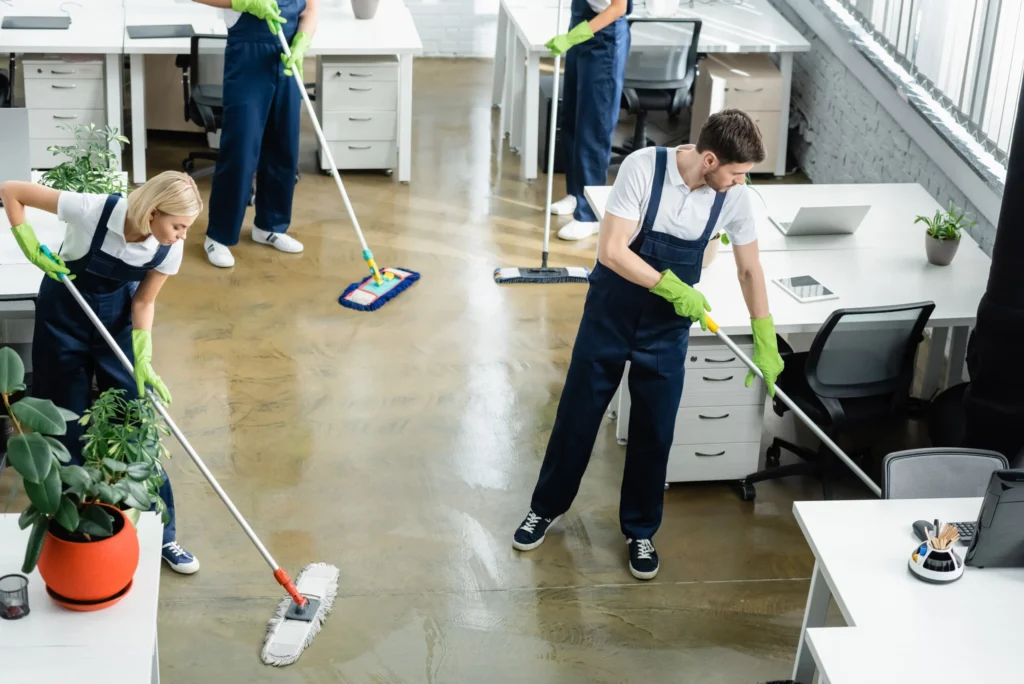
- The floors are large or high-traffic, such as an office, studio, or shop
- You’re not sure what finish you have
- You’re preparing for a move, sale, event, or reopening
- You don’t have the time
Know which professional you need
A cleaning company handles cleaning. A flooring contractor handles sanding, recoating, and refinishing. If your floor needs the finish redone, a cleaning crew can’t fix it, and a flooring pro can’t be expected to just clean it.
What it costs
I couldn’t find a reliable independent benchmark for hardwood cleaning alone. Quotes typically combine a per-square-foot rate with a minimum charge. One cost guide puts standard cleaning around 0.60–1.20 per square foot with a minimum of roughly 120–180 for small jobs, but treat that as a loose reference only.
What to ask a provider:
- Do you clean my finish type, and what products do you use?
- How much water do you use, and how do you dry the floor?
- Is this cleaning, buffing, recoating, or refinishing?
- Are you insured, and can you give references?
- Can I get a written quote?
- How long until the floor can be walked on?
Superior Janitorial Systems is a commercial cleaning company serving San Jose and nearby Silicon Valley cities. Its floor cleaning service covers hardwood, tile, and vinyl floors, removing scuff marks and heavy build-up, and it offers free estimates. If you manage an office, studio, or other commercial space with wood floors, call (408) 377-8720 to discuss scope and scheduling. For a home, ask any provider directly whether they service residences.
FAQ’s
Can I use hardwood floor polish or restorer?
Sometimes. Only use products labeled for your finish, and avoid heavy buildup. Waxes and oil soaps on a surface-finished floor can leave residue that causes problems when it’s time to recoat.
Is engineered hardwood cleaned the same way?
Mostly, yes. The basic methods are the same for most wood floors, but check the manufacturer’s guide. Engineered floors can have thinner wear layers, so they have less room for sanding.
What should I do after a leak or flood?
Act fast. Remove standing water, dry the area, and call a water damage or flooring professional. Dark staining or cupping means water has reached the wood.
How long until I can walk on the floor?
After a damp clean, usually a short time as it dries. After a recoat or refinish, expect to stay off the floor for roughly 24–48 hours per coat, and longer before replacing furniture. Follow your contractor’s instructions.
Are disposable wet pads okay?
Yes, if they’re designed for hardwood floors. Avoid pads for general or tile surfaces.
Does commercial hardwood need different care?
The same principles apply, but heavy traffic means more frequent dry maintenance, stronger entry matting, and a set schedule. Strip-and-wax is typically for resilient floors such as vinyl composition tile, not polyurethane-finished hardwood, so confirm the right service for your floor type.
